


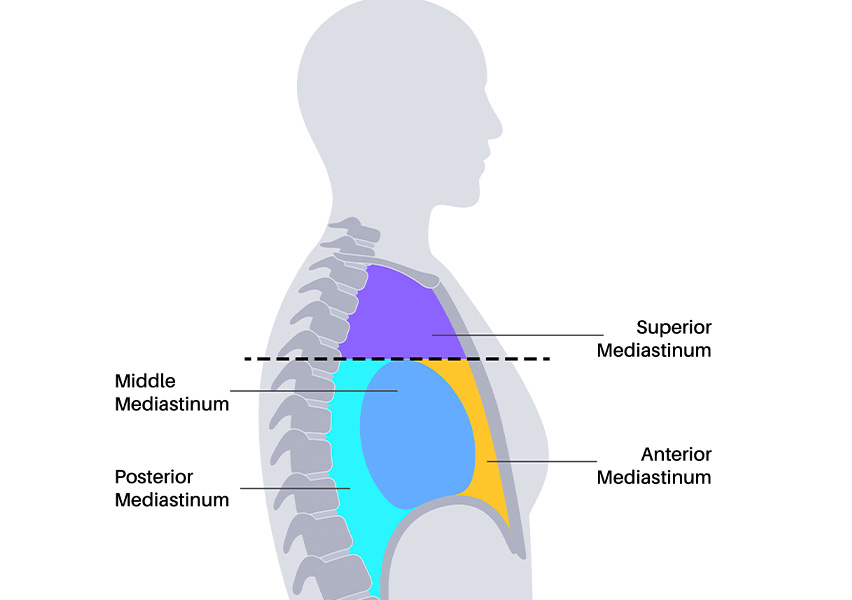
Malignant mediastinal diseases refer to cancers or tumors that develop in the mediastinum, the central compartment of the thoracic cavity. These can arise from various structures within the mediastinum, including the thymus, lymph nodes, nerves, blood vessels, and other tissues. Malignant mediastinal tumors are often classified based on their origin, and some common types include:
Thymic Carcinoma: A cancer that originates from the thymus gland. Thymic carcinomas are considered malignant and can be aggressive.
Lymphomas: Malignant tumors of the lymphatic system, such as Hodgkin lymphoma and non-Hodgkin lymphoma, can affect the lymph nodes in the mediastinum.
Germ Cell Tumors: These tumors can occur in the mediastinum and include malignant teratomas and other germ cell-derived cancers.
Neurogenic Tumors: Malignant tumors arising from nerve tissue, such as malignant peripheral nerve sheath tumors (MPNSTs), neuroblastomas, or malignant schwannomas.
Mesothelioma: A cancer that usually affects the lining of the lungs (pleura), but it can also occur in the mediastinum. Mesothelioma is often associated with asbestos exposure.
Primary Mediastinal B-cell Lymphoma: A specific type of non-Hodgkin lymphoma that primarily affects the mediastinum.
Primary Thymic Adenocarcinoma: A rare but aggressive cancer that originates from the thymus gland.
Metastatic Tumors: Cancers that have spread (metastasized) to the mediastinum from other parts of the body, such as lung cancer, breast cancer, or renal cell carcinoma.

Benign mediastinal diseases refer to non-cancerous conditions that affect the structures within the mediastinum, the central compartment of the thoracic cavity. These conditions can arise from various tissues in the mediastinum, including the thymus, lymph nodes, nerves, blood vessels, and other structures. Here are some examples of benign mediastinal diseases:
Thymoma: While thymomas can be malignant, some thymic tumors are benign. Benign thymomas are typically slow-growing and do not invade nearby structures.
Thymic Hyperplasia: An enlargement of the thymus gland, which is a part of the immune system. Thymic hyperplasia is often benign and can be associated with various conditions, including autoimmune disorders.
Lymphadenopathy: Enlargement of the lymph nodes in the mediastinum due to reactive changes or inflammatory conditions. This can be caused by infections, inflammation, or other benign processes.
Bronchogenic Cysts: Fluid-filled sacs that develop from abnormal embryonic tissue. These cysts are usually benign and may be asymptomatic or cause respiratory symptoms.
Pericardial Cysts: Cysts that form within the pericardium, the sac surrounding the heart. These are typically benign and may be discovered incidentally on imaging studies.
Neurogenic Tumors (Benign): While malignant neurogenic tumors can occur in the mediastinum, some tumors such as benign schwannomas or neurofibromas are non- cancerous.
Thyroid Goiter: Enlargement of the thyroid gland, which can extend into the mediastinum. Most goiters are benign, but some may cause symptoms due to compression of nearby structures.
Esophageal Diverticula: Pouch-like protrusions that can develop in the wall of the esophagus. While they are not tumors, they can cause symptoms such as difficulty swallowing.
Vascular Anomalies: Benign vascular malformations or anomalies, such as hemangiomas, may occur in the mediastinum.

Teratomas: Germ cell tumors that can contain a variety of tissues, including hair, teeth, and muscle. While some teratomas can be malignant, others are benign.
The diaphragm is a large, dome-shaped muscle that separates the chest cavity from the abdominal cavity and plays a crucial role in the process of breathing. Diseases affecting the diaphragm can lead to respiratory and other health issues. Some common diaphragm-related diseases include:
Diaphragmatic Hernia:
Congenital Diaphragmatic Hernia (CDH): A condition present at birth where there is a hole or opening in the diaphragm, allowing abdominal organs to move into the chest cavity. This can lead to respiratory distress and other complications.
Bochdalek Hernia:
Similar to congenital diaphragmatic hernia, Bochdalek hernia is a type of diaphragmatic hernia that occurs in infants. It involves an opening in the diaphragm, allowing abdominal organs to move into the chest.
Morgagni hernia, also known as a Morgagni diaphragmatic hernia, is a type of congenital diaphragmatic hernia (CDH) that occurs in the anterior (front) part of the diaphragm.
Hiatal Hernia: A condition where part of the stomach protrudes through the diaphragm into the chest cavity. It can cause gastroesophageal reflux (GERD) symptoms.
Diaphragmatic Paralysis:
Paralysis or weakness of the diaphragm can result from injury, nerve damage, or underlying medical conditions. It can lead to difficulty breathing and respiratory distress.
Eventration of the Diaphragm:
This condition involves the abnormal elevation of a portion of the diaphragm, often due to congenital factors or weakness in the muscle. It may lead to respiratory symptoms.
Phrenic Nerve Disorders:
The phrenic nerves control the movement of the diaphragm. Disorders affecting these nerves can result in diaphragmatic dysfunction and breathing difficulties.
Myasthenia Gravis:
An autoimmune disorder that affects the neuromuscular junction, including the phrenic nerves and the diaphragm. It can lead to muscle weakness, including respiratory muscles.
Trauma:
Injuries to the chest or abdomen, such as blunt trauma or penetrating injuries, can result in diaphragmatic injuries or hernias.
Idiopathic Diaphragmatic Paralysis:
In some cases, the cause of diaphragmatic paralysis may not be clear, and it is termed idiopathic.
